Signs Of Water Leak In Wall (What To Look For In Your Home)
Feb 6, 2026
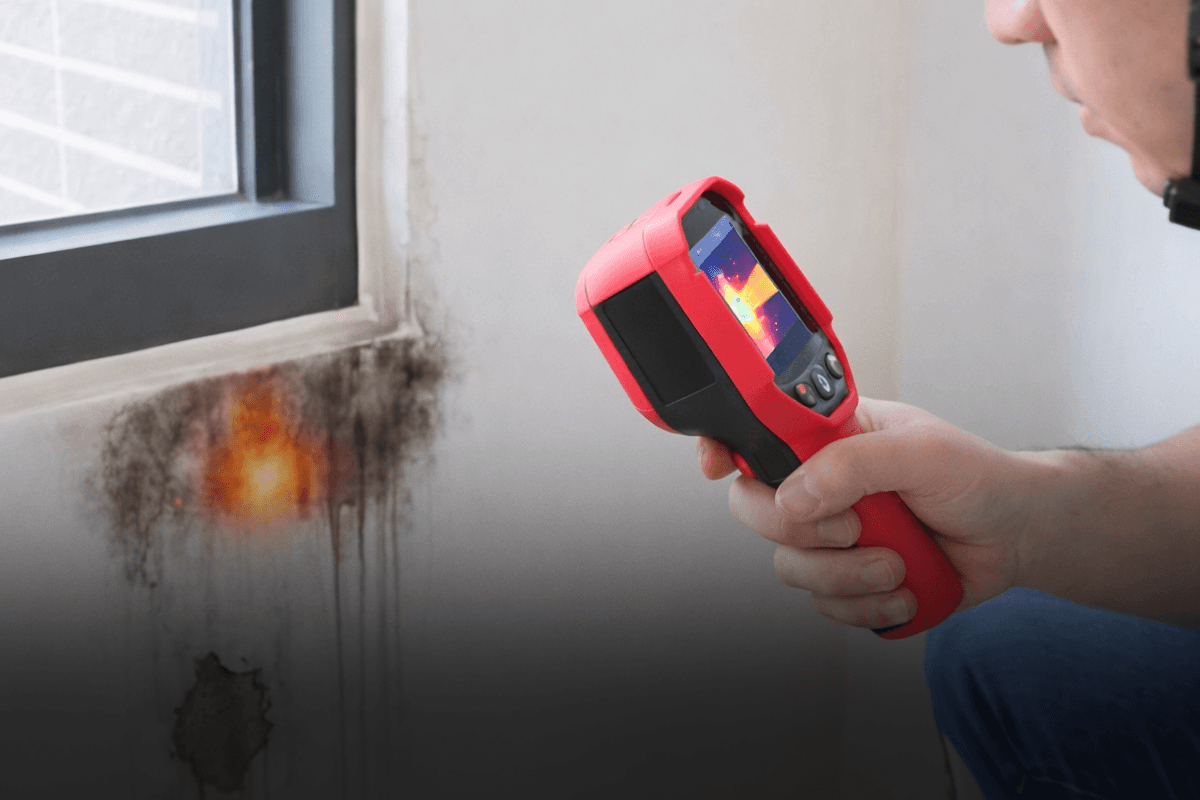
A water leak usually starts quietly, in ways that are easy to overlook: a patch that looks slightly different, paint that doesn’t behave as it used to, a smell you can’t quite place.
In London homes, where pipes are often hidden and walls do a lot of the work, those small changes matter.
We’ll break down the signs of water leak in wall problems, how to spot them early, and what to do before damage spreads.
Key Notes
Texture, temperature, and smell changes often appear before visible wall damage.
Water meter movement and pressure drops confirm active leaks behind walls.
Condensation dries evenly; wall leaks persist, spread, and resist ventilation.
Early Visual Signs on Wall Surfaces
Subtle Discolouration and Staining
One of the earliest signs of water leak in wall areas is a small patch of discolouration that was not there before.
These patches are often yellow, light brown, or slightly darker than the surrounding paint. They tend to have soft, blurry edges rather than sharp lines.
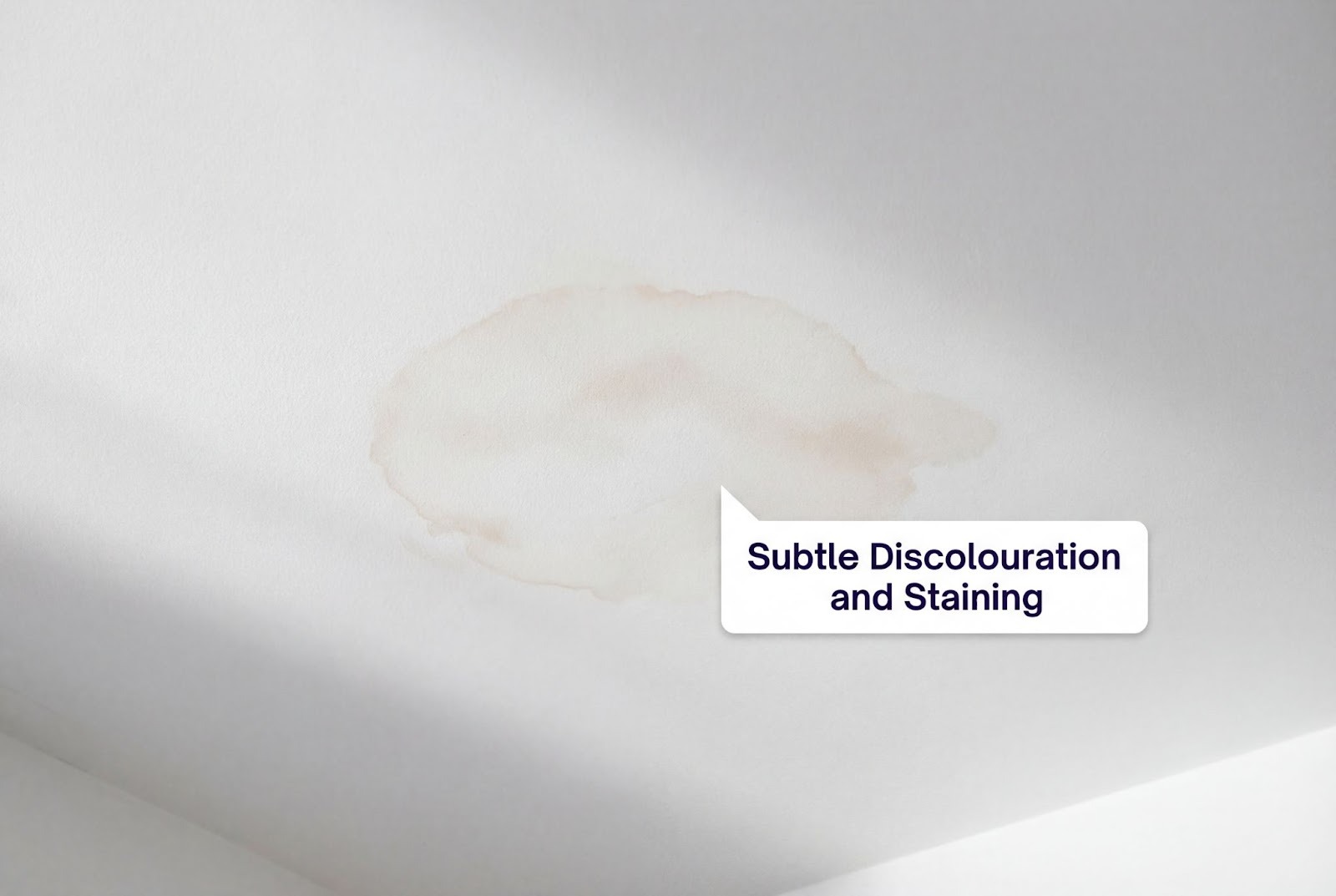
Unlike old stains, active leaks change slowly. A mark that grows wider or taller over several days is rarely decorative. Vertical streaks are especially telling, as they often follow pipe runs or wall studs rather than gravity alone.
Paint Changes That Signal Moisture
Paint reacts quickly to moisture, even before colour changes appear.
Look for:
tiny bubbles
blisters
hairline cracks
… isolated to one area of the wall.
Sometimes the paint looks intact but feels different, slightly duller or chalkier than the surrounding surface.
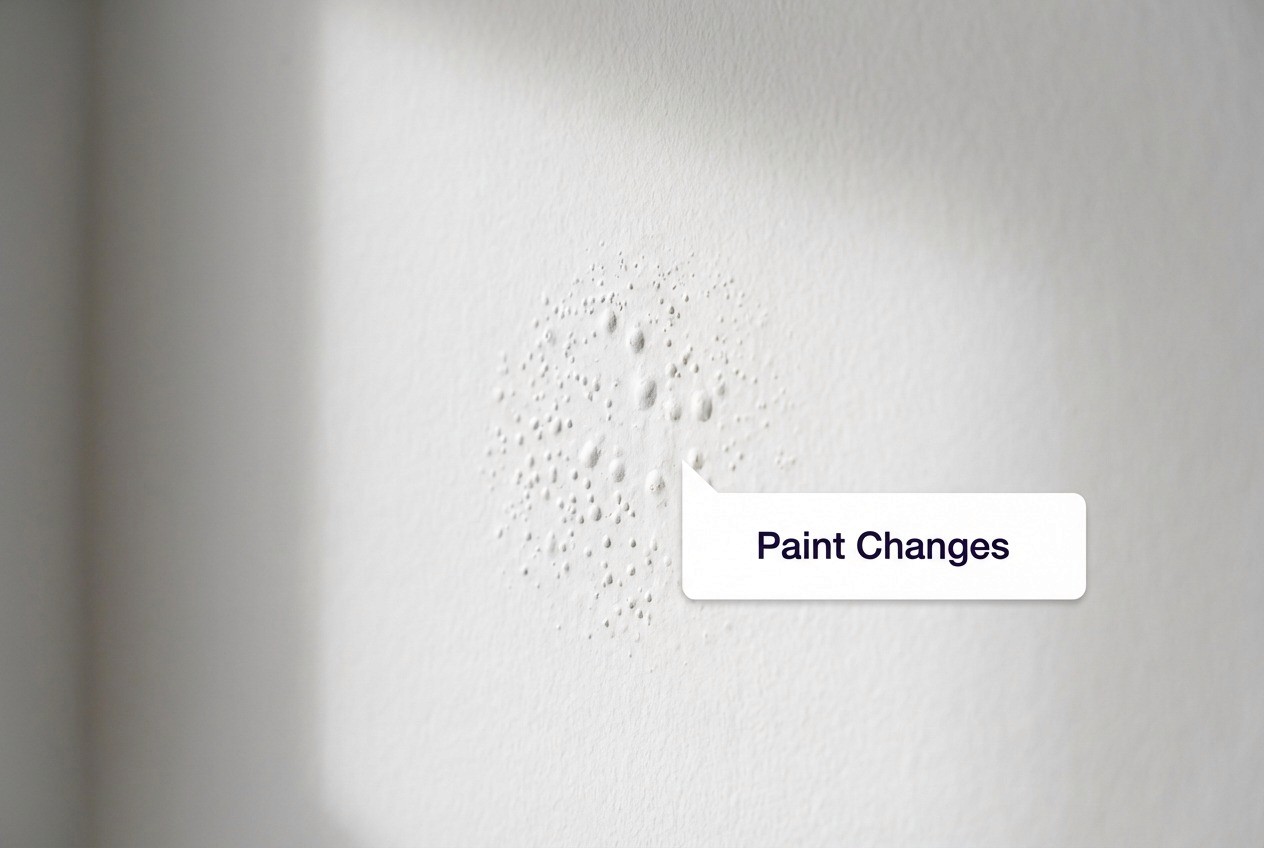
In some cases, the wall appears faintly swollen or wavy. This is easiest to spot by standing at the end of the room and looking along the wall at a shallow angle.
These changes are easy to dismiss, but they are rarely random.
Wallpaper, Skirting Boards & Trim Warning Signs
Wallpaper Lifting / Rippling
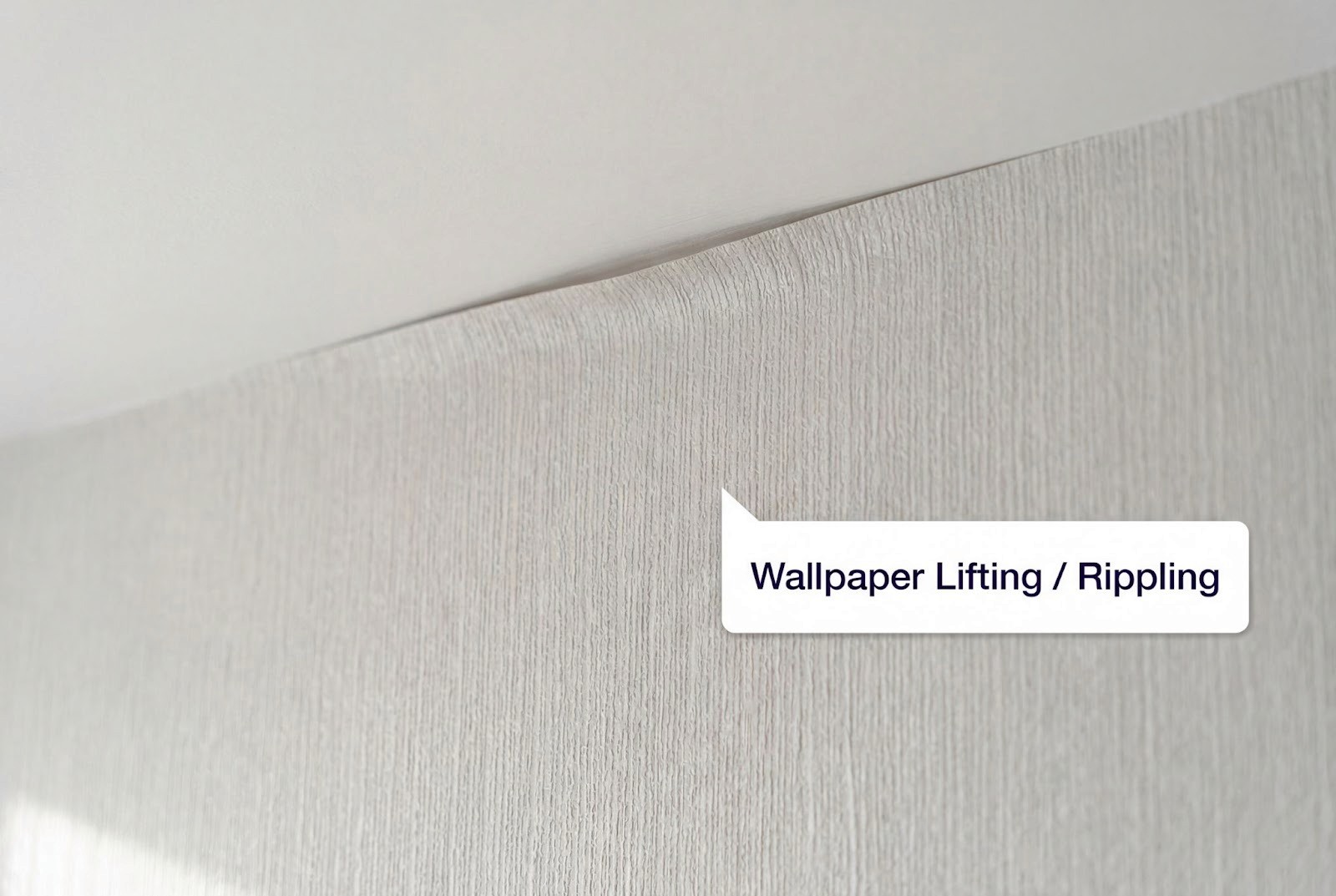
Wallpaper is often the first finish to react to moisture behind a wall.
Early signs include:
seams lifting slightly
edges curling
fine ripples forming in the pattern
These ripples can look like poor installation, but the key difference is timing. If they are new and localised, moisture is usually involved.
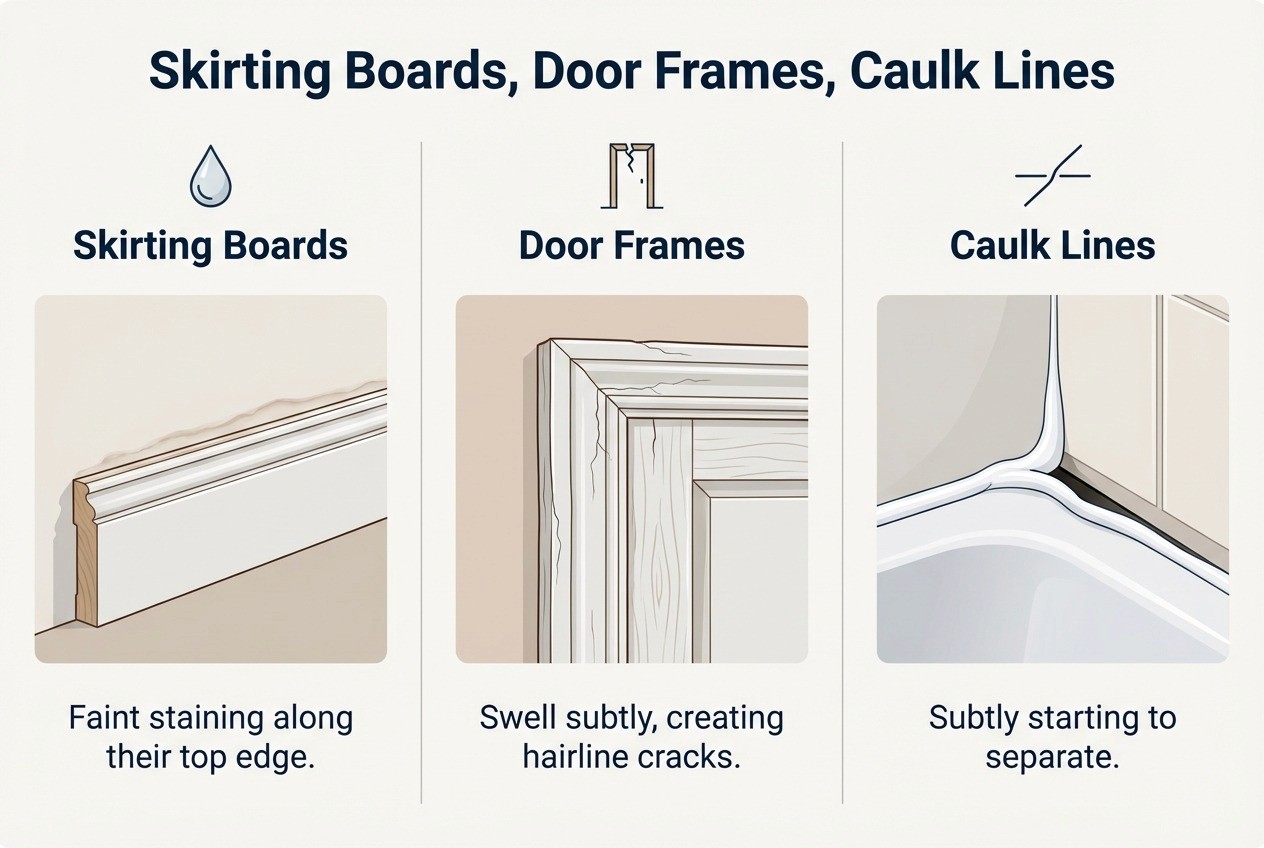
Skirting Boards, Door Frames, Caulk Lines
Pay attention to the details near the floor:
Skirting boards may show faint staining along their top edge or develop small gaps where they meet the wall.
Door frames and architraves may swell subtly, creating hairline cracks or slight misalignment.
Caulk lines that were once neat can begin to separate.
These changes often appear before the wall itself looks wet.
Changes You Can Feel: Texture, Softness & Temperature
Soft or Spongy Wall Areas
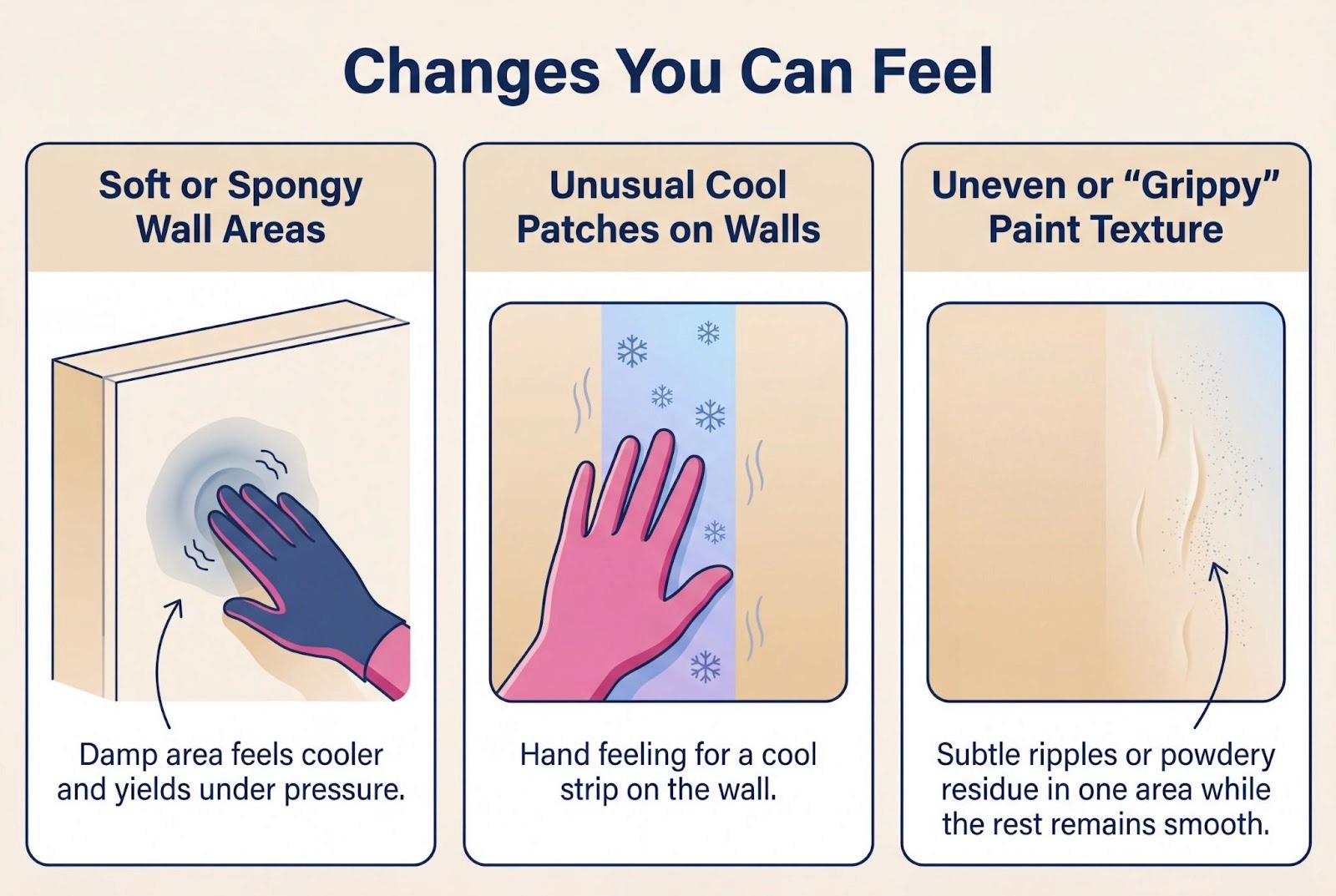
Moisture changes the structure of plasterboard and plaster long before visible damage occurs. Pressing gently on a suspect area may reveal a slight softness or give compared to the surrounding wall.
Dry walls feel firm and rebound quickly.
Damp areas feel cooler and yield just a little under pressure.
This is especially common near bathrooms, kitchens, and radiators.
Unusual Cool Patches on Walls
Water evaporating behind a wall cools the surface. This can create temperature differences of a few degrees that are noticeable by hand or cheek.
Run your palm vertically along the wall after using nearby plumbing. A persistent cool strip often traces the path of moisture behind the surface.
Uneven or “Grippy” Paint Texture
Paint exposed to water vapour can develop a slightly tacky or uneven feel. Running your fingers lightly across the wall may reveal subtle ripples or powdery residue in one area while the rest remains smooth.
These texture shifts often appear days or weeks before paint begins to blister.
Sensory Clues Beyond Sight & Touch

Musty or Damp Smells Near Walls
A musty smell is one of the most reliable early indicators of a leak behind a wall. It is caused by mould and bacteria feeding on damp materials with little airflow.
The smell is often strongest:
near skirting boards
inside cupboards
or after the room has been closed up
A localised stale odour is more significant than a general damp smell after showering.
Sounds Coming From Inside the Wall
In quiet moments, especially at night, leaks can sometimes be heard:
faint dripping
hissing
or trickling noises
… may follow vertical pipe runs.
Pressing an ear or a glass against the wall near fixtures can make these sounds easier to detect. These noises often appear long before any water becomes visible.
Floor-Level and Junction Signs Near Walls
Water does not always surface where it enters. It often travels downward and emerges at junctions.
Narrow bands of discolouration where the wall meets the floor are common early signs.
Carpet or flooring may feel dry on top while the material underneath is damp.
Wood and laminate floors may show slight edge lift or cupping along one wall.
These changes are frequently blamed on seasonal humidity, but when they appear in isolation, a wall leak is a strong possibility.
Plumbing and System Clues That Confirm a Leak Behind a Wall
Water Meter Movement When Everything Is Off
Turn off all taps, appliances, and toilets. Check the water meter and wait 30 to 60 minutes. Any movement, even slow, indicates water is flowing somewhere it should not be.
This is one of the clearest ways to confirm a pipe leaking in a wall.
Drops in Water Pressure
Leaks under pressure divert water away from fixtures:
Showers may lose force.
Taps may take longer to reach full flow.
When multiple fixtures are affected, the issue is rarely local.
Rising Water Bills
Slow leaks waste more water than most people expect. A leak of just a few litres a day adds up quickly. Unexplained increases in water bills often appear before visible damage.
How to Tell Condensation from a Water Leak in the Wall
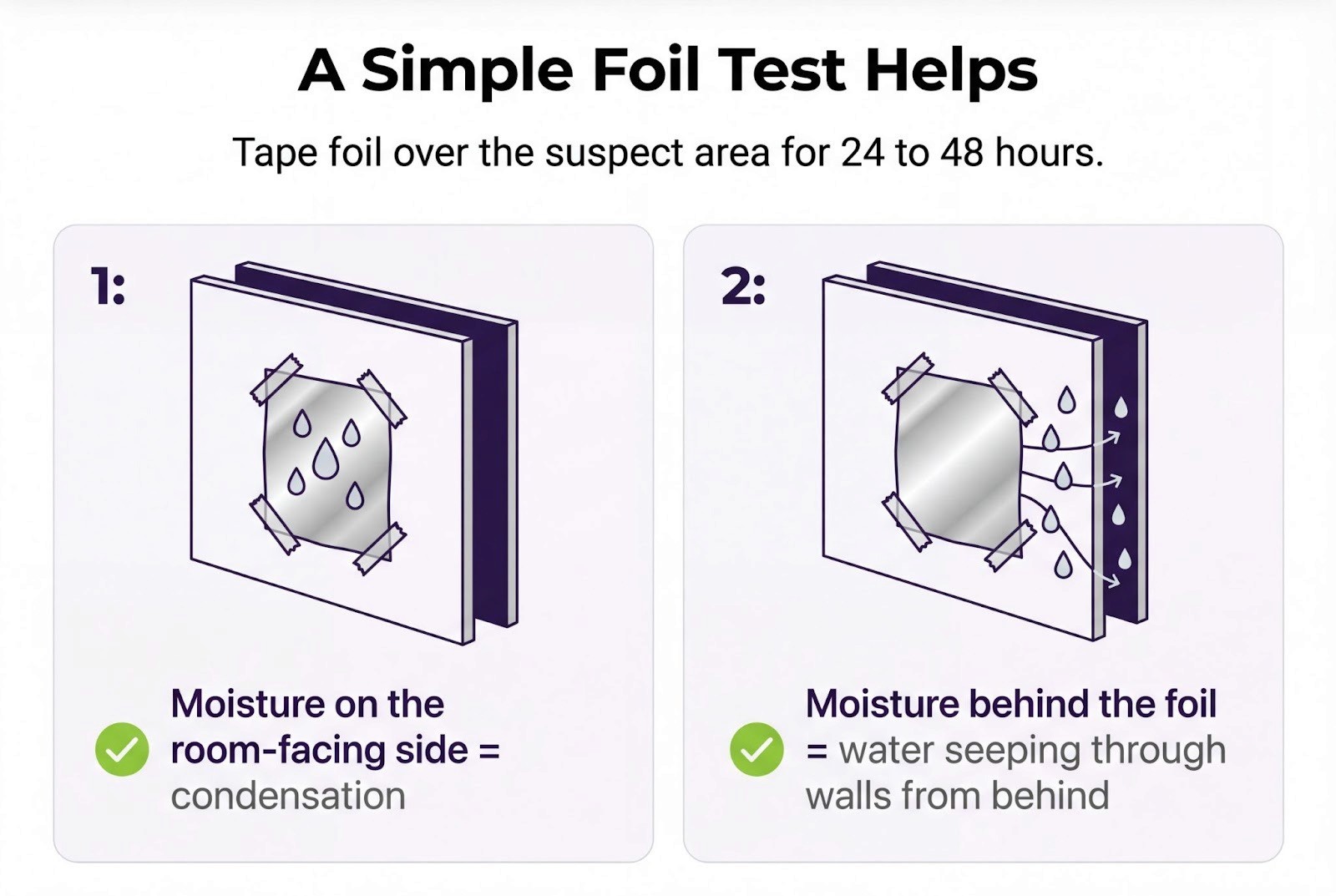
Condensation behaves differently from leaks. It forms evenly on cold surfaces and disappears with ventilation. Leaks create isolated patches that resist drying.
What To Do When Suspecting A Water Leak In The Wall
1. Check For An Active Leak
Before doing anything else:
Turn off all taps, appliances, and toilets
Check your water meter for movement
Any movement suggests a pipe leaking in a wall
2. Watch For Changes Over 24–48 Hours
Small signs tell you a lot:
Mark the edge of stains or ripples with a pencil
Check if they grow, darken, or feel softer
Persistent or expanding patches usually mean a leak behind the wall
3. Avoid Opening Walls Or Patching Over Signs
Guessing often means opening the wrong area
Extra damage can increase repair and insurance costs
Cosmetic fixes hide the problem but do not stop it
4. Get The Leak Accurately Located
At London Leak Detection, we work on a fixed £490 day rate:
Covers up to 4 hours of non-invasive detection
No Find, No Fee – you only pay if the leak is found
Full, insurer-approved report with photos
Support with trace-and-access insurance claims
Complete pricing transparency, no hourly surprises
Once the leak is precisely located, repairs are smaller, faster, and far less disruptive.
Seeing Signs But No Visible Leak?
Pinpoint the source, protect your home.
Frequently Asked Questions
Can a water leak in a wall stop on its own?
Very rarely. Most wall leaks come from pressurised pipes or failing joints, which tend to worsen over time. Even if signs fade temporarily, moisture often continues behind the wall.
How long does it take for a wall leak to cause serious damage?
In many cases, mould can begin developing within 24–48 hours. Structural damage and floor or ceiling issues can follow within weeks if the leak remains active.
Will my home insurance cover a leak inside the wall?
UK insurers typically cover trace-and-access and resulting water damage, but not the failed pipe itself. Proper leak detection reports help support claims and speed up approval.
Is it safe to live in a home with a hidden wall leak?
Small leaks can still create electrical risks, mould exposure, and weakened materials. If signs persist or worsen, locating the leak promptly reduces safety and health concerns.
Conclusion
A water leak in a wall rarely starts with anything dramatic. It shows up as small, easy-to-ignore changes: a patch that slowly spreads, paint that feels different, a faint smell that comes and goes.
In London homes, especially those with older plumbing or dense pipe runs, these signs are often the only warning before damage escalates.
Knowing the signs of water leak in wall issues, how to separate leaks from condensation, and when system clues like meter movement confirm a problem helps you act early, limit disruption, and avoid unnecessary repairs.
If something still doesn’t sit right, getting the leak accurately located before opening walls can make all the difference. Get a free quote for non-invasive leak detection to gain clarity, protect your property, and secure the reporting needed to move forward with repairs or insurance.